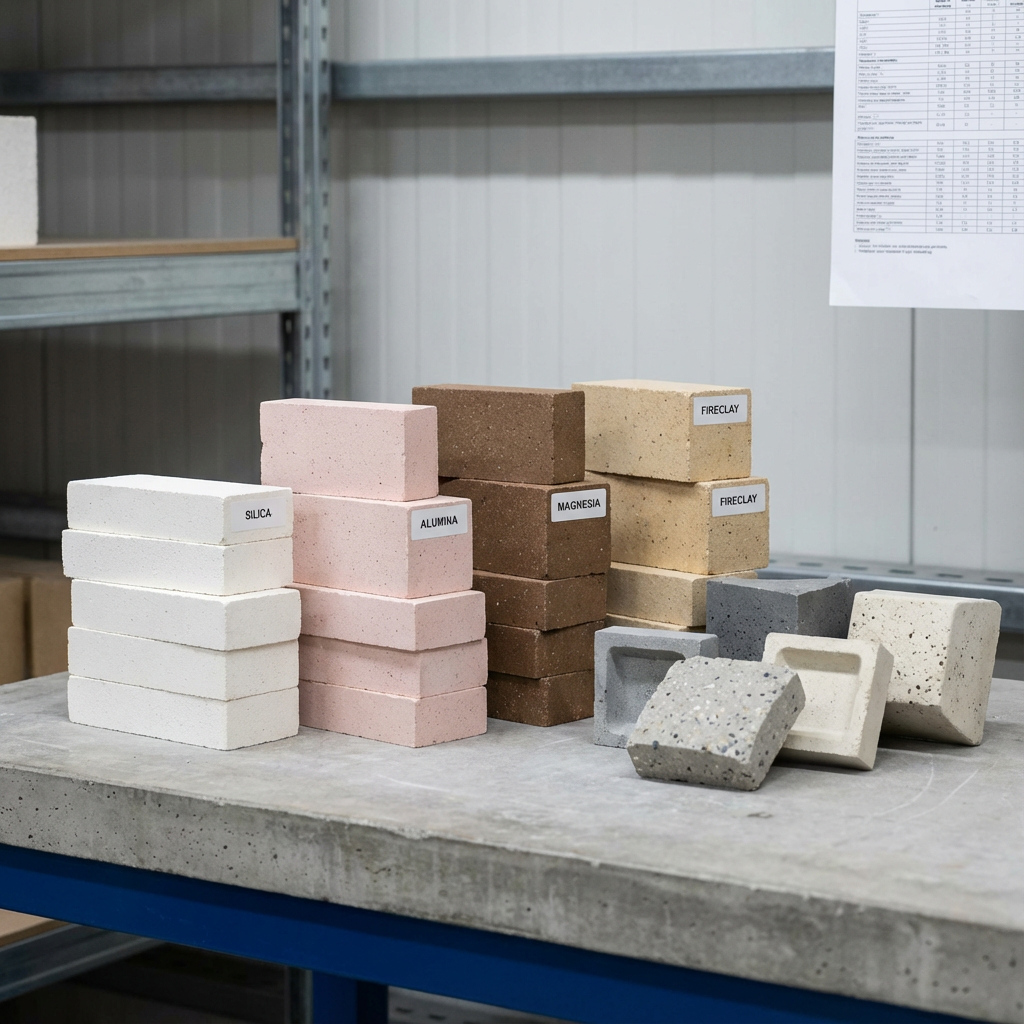
Refractory materials, the invisible heroes of industrial production, are indispensable for high-temperature processes. They play a critical role in many sectors from cement plants to glass production, steel industry to power plants.
What Does Refractory Mean?
The word "Refractory" comes from the Latin "refractarius" meaning "resistant to heat". Technically, refractory materials are ceramic-based materials that can withstand temperatures of 1500°C and above and maintain their physical and chemical properties at high temperatures.
Key Properties of Refractory Materials
- High Melting Point: Between 1500-3000°C
- Thermal Resistance: Resistance to sudden temperature changes
- Mechanical Strength: Resistance to pressure and wear
- Chemical Stability: Resistance to acids, bases, and molten metals
- Low Thermal Conductivity: Insulation property
Types of Refractories
1. Acidic Refractories
Silica (SiO₂) based materials. Resistant to low pH environments.
- Silica brick: In the crowns of glass and steel furnaces
- Clay brick: In low temperature applications
2. Basic Refractories
Magnesia (MgO) or dolomite based materials. Show high resistance to alkaline environments.
- Magnesia brick: Steel converters, cement kilns
- Magnesia-carbon: BOF and EAF steel furnaces
- Dolomite brick: Steel industry
3. Neutral Refractories
Materials resistant to both acidic and basic environments.
- Alumina (Al₂O₃): Versatile use
- Chrome-magnesia: Special applications
- Carbon: Blast furnaces
Refractory Classification by Form
Shaped Refractories (Bricks)
Pre-shaped and fired products:
- Standard brick (230x114x64 mm)
- Special shaped bricks
- Grids and special parts
Unshaped Refractories (Monolithics)
Products shaped on site:
- Castable: Application by casting
- Plastic: Application by hammering
- Ramming: Application by ramming
- Mortar: Joint filling material
- Gunning: Repair applications
Refractory Application Areas
Iron & Steel Industry
- Blast furnaces
- Steel converters (BOF)
- Electric arc furnaces (EAF)
- Tundish and ladles
Cement Industry
- Rotary kilns
- Clinker coolers
- Preheater towers
Glass Industry
- Melting furnaces
- Regenerators
- Forming lines
Work with PARLATEK METALLURGY
Choosing the right material and professional application is critical for your refractory needs. As PARLATEK METALLURGY, we offer:
- Free technical consulting
- Project-based material selection
- Quality material supply
- Professional application with expert team
Contact us for your projects.
Back to All Posts